Your maintenance history is already written down. It sits in thousands of work orders, technician notes, inspection reports and OEM manuals that nobody has time to read end to end. MRO Intelligence uses AI to read them for you. It pulls out failure causes, parts used, labour hours and repeat problems, then links them to each asset so planners can see the full repair story in seconds.
We start by connecting to your CMMS or EAM and the document stores your team already uses. Our models clean and classify free-text records, match them to your asset hierarchy and flag gaps in the data. From there, reliability engineers work with your planners to turn findings into action: overhaul intervals based on real condition, spares stocked for the failures you actually see, and repair procedures that capture what your best technicians already know.
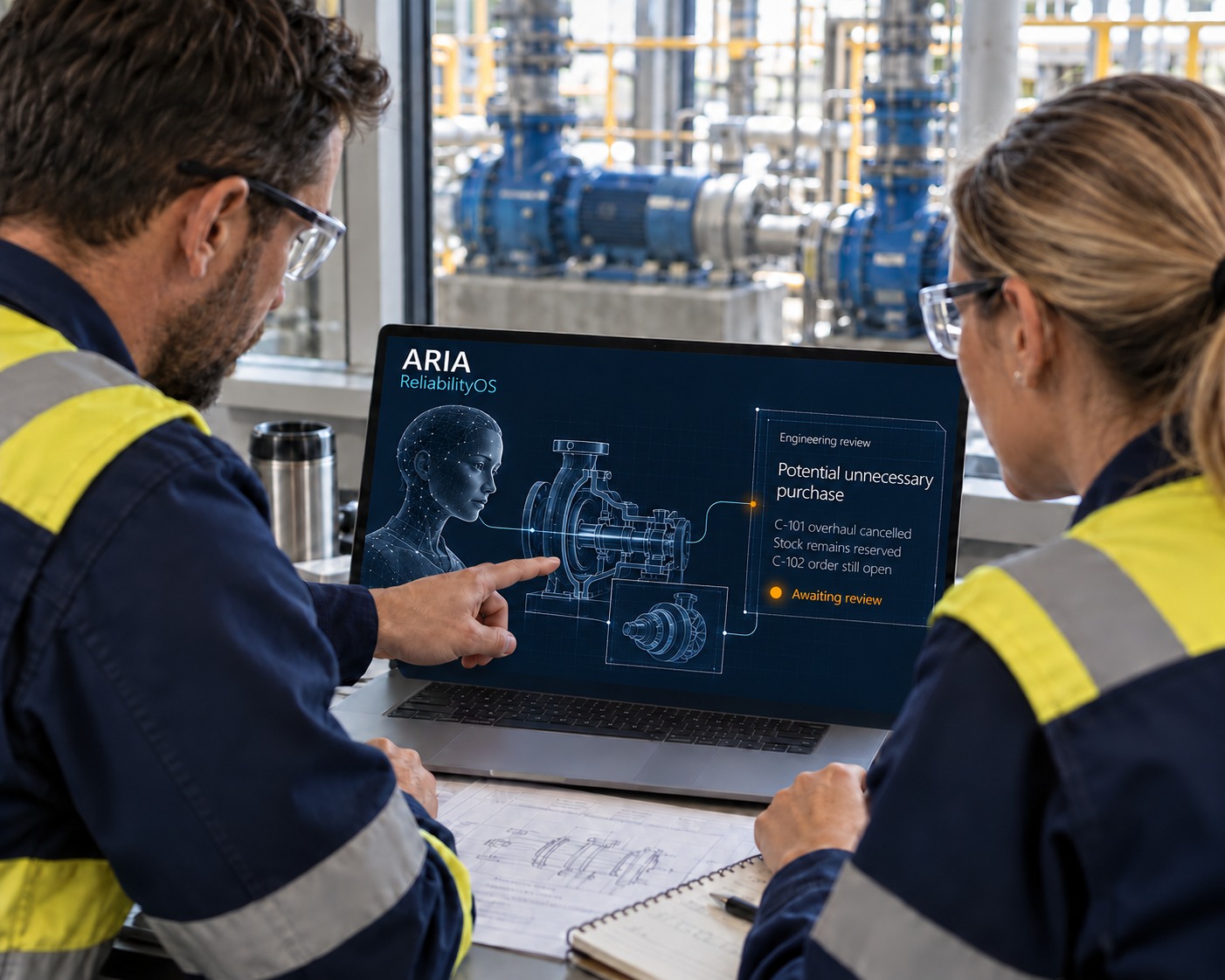
ReliabilityOS brings your asset, maintenance, operational and materials evidence together. ARIA is its active intelligence layer, connecting changes across systems to reveal emerging risks, hidden waste and improvement opportunities. Understand what changed, which assets are affected and where to act, with evidence-backed recommendations your engineers can review and approve.
Equipment condition, maintenance requirements and supply conditions keep changing. ARIA connects new evidence across ReliabilityOS to flag emerging risks and opportunities, recommend responses and help your team track approved actions
A recurring failure, an overdue task and an unavailable spare may sit in separate systems. Together, they can signal greater exposure. ARIA connects asset, maintenance, operational and materials evidence to reveal which assets are affected and why attention is needed
ARIA assesses connected signals, explains potential consequences and recommends actions with supporting evidence. Your engineers review the findings, apply operating context and approve responses, helping teams focus effort where it can reduce risk or deliver value.
Track approved actions against reliability, downtime, cost and inventory outcomes. As new evidence arrives, ARIA flags changes that may warrant reassessment, helping your team refine decisions and see whether interventions delivered the expected value.
Give your team an active intelligence layer that reveals risks, explains consequences and helps prioritise action.
ReliabilityOS connects asset, maintenance, operational and materials evidence. ARIA interprets that evidence to identify emerging risks, hidden waste and improvement opportunities. When conditions change, your team can see what changed, why it matters and what action to consider, with engineers retaining control of decisions
Yes. We assess your existing CMMS, ERP and other data sources, then agree the connections needed for your priority use cases.
Combined exposure, such as recurring failures, overdue maintenance and an unavailable critical spare affecting the same asset.
ARIA reassesses connected evidence as updates become available, flagging changes that warrant attention. Update frequency depends on your integrations.
ARIA links recommendations to supporting evidence and highlights gaps or uncertainty. Your engineers validate the findings before action.
Your authorised teams review and approve actions. ReliabilityOS supports the workflow and tracks decisions and outcomes.